Better days
Gypsy Tailwind show power and Grace
Gypsy Tailwind have been a slow build. Though Halo Sessions was one of the best local albums of 2008, it seems no one really heard it until 2009, thanks largely to the radio success of “So Lonely,” a single whose melancholy bounce was heartbreakingly honest: “I’ll tell you a secret: I drank myself to sleep last night.” Their shows, too, have been measured out to increase anticipation and capitalize on opportunity. No one who wound a way down Market Street to the Big Easy after Ray LaMontagne’s Merrill Auditorium show [in June of 2009] was disappointed with Gypsy’s similar combination of roots and soul.
 And they’re just getting started, really. Halo Sessions’ spare and measured arrangements weren’t necessarily by design. They were in some ways simply sketches by two vocalists, Dan Connor and Anna Lombard, who were trying to figure out just what kind of art they could make together. Over the past year they’ve decided they sound pretty great together, thanks, and they’ve collected themselves a band to fill things out: Max Cantlin (This Way) on guitar, Tyler Stanley (Sly-Chi) on keys, Colin Winsor (Jaye Drew and a Moving Train, Jason Spooner) on bass, Chris Dow (Band Beyond Description) on drums.
That done, Gypsy Tailwind re-entered the studio with Jonathan Wyman and produced Grace, released last week and celebrated with a show this Saturday at the Port City Music Hall. It is bigger and bolder and more true to the stage presence the band now evince, something akin to a modern-day Fleetwood Mac, if they’d been formed in Nashville instead of London, raised on Dylan and Emmylou Harris instead of John Spencer and Howlin’ Wolf.
If you’ve spent 100 listens with Halo, Grace will necessitate something of a recalibration, however. From the get-go, “Way to Here” opens with soaring minor-key strings (a four-piece section of Anna Maria Amoroso, Heather Kahill, Julie Anderson, and Tim Garrett), and though Connor’s voice is as velvet smooth as ever, when the full band enters it does so with a confidence of belonging. In fact, while Connor and Lombard trade verses, creating a narrative dynamic like you’re peeking in on an intimate conversation (“I’m going to grab the things I own and move away”; “With all my love I wish you were still here”), there are times where they aren’t the most important thing happening, and the finish is a 30-second play out of active cello and trilling strings that is wholly ignorant of them.
Remember Ray Lamontagne’s maturation with producer Ethan Johns? The difference between Old Crow Medicine Show before and after Don Was? This progression with the band is similar. It is more, but it’s also different from whatever that first blush was.
And it’s almost like they’re getting it out of the way in a hurry. The new album’s second track, “The Letter,” opens with a horn section (Rustic’s Ryan Zoidis and Dave Noyes, naturally, along with Mark Tipton, Joe Parra, and John Maclaine), for criminy’s sake, for a song that’s all lonesome-heart Lombard: “So here’s your letter/ I’m gonna sing it cuz it’s my way.” She’s definitely more aggressive throughout the album, at times projecting some major volume. She goes toe to toe with Cantlin’s throaty electric guitar in “Silver and Gold” without a petal wilted (and listen there for Bob Hamilton’s banjo — a great melancholy foil).
For the album’s heart, though, Lombard and Connor settle into comfortable territory. “Better Days” is a great complement to the first album’s “Long Drive Home from Montreal,” with Connor getting out of the gate alongside slide guitar by trying to get out of San Francisco, and “the next flight out is Tuesday night/ I get my things and be polite … didn’t want to follow you.” Under three minutes, it’s a postcard of cautious optimism. Lombard, accompanied by an alternating organ, believes there will be better days, but Connor is “so scared of what my dreams say.”
“Barrel” is further stripped, a simple ballad that gets downright Jim James (a la his “Going to Acapulco” cover on the I’m Not There Soundtrack) in the finish as Lombard and Connor are personified by a trumpet and violin that wander off into a setting sun and fade to black. The lyrics are among the album’s best here, working to acknowledge the listener’s desire for the two voices to make like a short film: “We laughed about all the of the inside things/ We talked all night, till someone would drift to sleep/ Are you awake my dear?” At 3:40, it’s too short.
As is the album, I guess. The eight songs here make for a crisp package, but with the arrangements and production lending such a different feel to the band, I’d have liked to hear a couple new takes on the first set of songs, especially “Two and One.” Maybe as a bonus hidden track or something.
But it’s good to be kept wanting, and there certainly aren’t any throwaways here. “Madeline” is Connor’s best vocal turn, rising up in the register as his emotion carries him, and the trumpet-guitar handoff of the melody in the bridge is terrific. The Aimee Mann cover “Coming up Close” has Lombard more reserved, dispelling any worry she might be becoming a bit of a yeller: “We thought for once we really knew what was important.” And “The Last Song” has her doing pure pretty, crisp like Christine McVie doing “Over My Head.”
There’s talk of dueling solo albums and Connor is known as a prodigious songwriter, so don’t think this will have to tide you over for too long. If anything, this is just a taste of things to come.
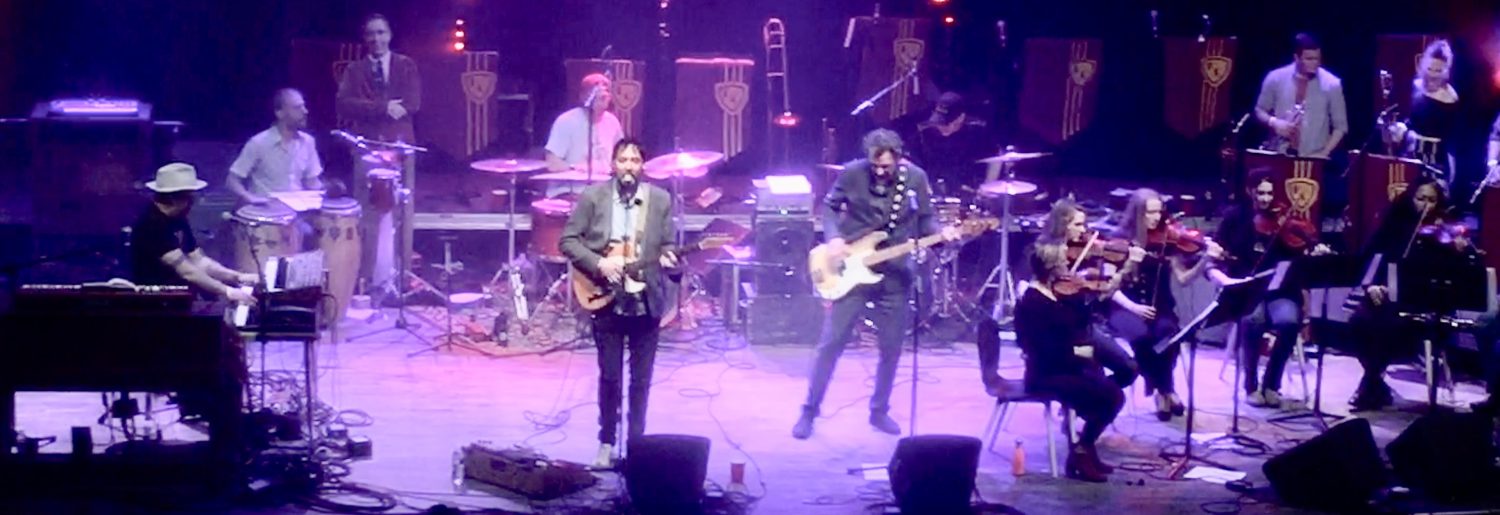
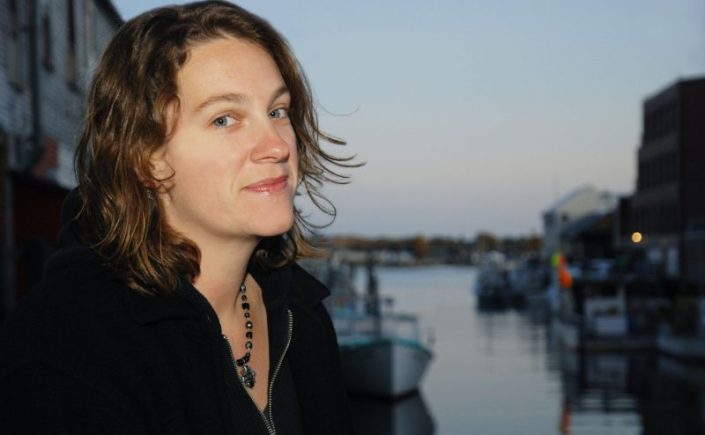
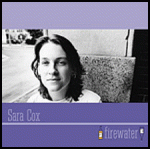 Here on Cox’s Firewater [released back in 2000, I can’t find a place to stream this, though two other Sara Cox records are on Spotify. Here’s where you can buy the record on eBay], a sadness pervades, but it’s not the sadness of self-pity. It’s the sadness you feel when you go back and visit a house you haven’t lived in for a while: You can’t help but miss everything that went on there, even if it wasn’t always good times and smiles. Every song is about a relationship that didn’t, isn’t, or won’t work, but somehow that’s okay, because it has to be.
 Portland's Best Albums | Maine Music Reviews