Headstart: B

B real

Headstart! go where they wanna go

There was a time when we wouldn’t review EPs in this space (Sontiago is still bitter about it). EPs were stop-gaps, unimportant works, the theory went. Albums were serious affairs worthy of review.

Times have changed [*The “times” in this instance is October 2010]. An iTunes-trained culture is now back to consuming music by the single morsel and local producers like Jonathan Wyman are now advocating (rightly, in my opinion) that bands focus their efforts on bite-sized releases in more frequent fashion, giving the public more opportunity to catch that one great song they want for the workout mix.

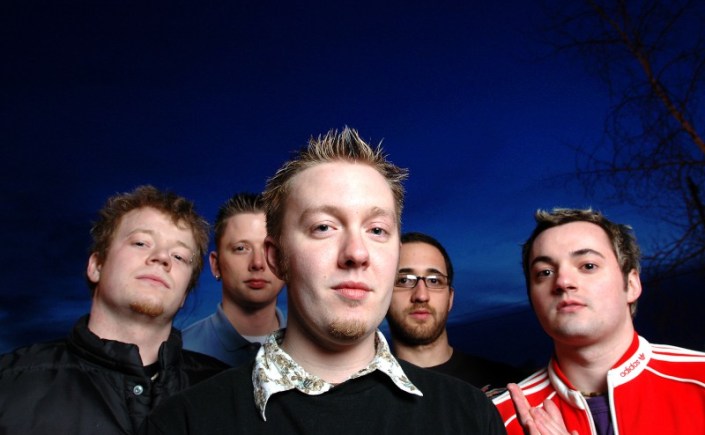
Few bands have embraced this as heartily as Headstart!, whose pop-radio-rock orientation makes them ideally suited for this new paradigm. Throwing over pretensions about making “art,” they began a series of EPs last year with A, and now deliver B for the Halloween weekend. Yes, they fully intend a C, and as many more alphabet letters as finances and life’s right turns allow.

While the first installment in the series comprised straight-ahead pop songs in classic Headstart! fashion, B is more experimental. Sure, there is the smash-hit-sounding “Monday,” that opens the disc and will likely get plenty of spins on local radio, but the other four songs here are all decidedly left of pop center.

First that “Monday,” though. It’s as straight-up a radio rock song as a band could muster nowadays, with a quickly sung verse from frontman Kevin Kennie, a huge singalong chorus, a semi-reggae segue bit to spice things up, and a gang-vocal bridge before things wrap up. There isn’t a band in town that knows better how to put together this particular puzzle.

“You used to feel like Saturday/ No work and plenty of play,” Kennie sings, borrowing from a pop tradition that goes as far back, at least, to the Mamas and the Papas’ “Monday, Monday.” Now, however, “you feel like a Monday/ You feel like a thankless job/ You feel like something long and painful.” Ouch.

Then they follow that with a song about twice as mature and interesting, if not quite as instantly catchy. Opening with a piano and dirty guitar, “Home Vs. Away” is melancholy in a way they haven’t been since the Our House record, which was darker than this. Kennie’s throaty yell has been replaced by a more nuanced sing. And the chorus, which progresses like a relationship from I to you to we, absolutely buries the hook.

Even when Headstart! seem to be cranking out a throwback to earlier albums, as on the 2:35 pop track “Doesn’t that Sound Good,” they’re throwing out a wrinkle: that’s rhythm guitarist Ian Blanchard on lead vocals.

The craziest track here is “I’m the One,” a song that truly shows Headstart! are willing to try just about anything. It opens expansive and heavy, with digital whirs and feedback, crazed vocals stepping all over each other to create a manic feel. It could be a Dead Season tune. Well, until it flips into a pop chorus with a call-and-response rhythm.

Then it goes completely off the rails, dialing back into a piano-infused metal ballad before launching into a Queen-style chorus of voices like someone just dosed you.

If nothing else, it’s a lot of fun. As is seeing a band like Headstart! focusing less on what they’re supposed to do and more on what they want to do. Though they’ve never been predictable, with this album they’ll expand opinions of them greatly.

Photo credit: Matthew Robbins
Rustic Overtones: New Way Out

Days of the New

The orchestral stylings of Rustic Overtones 2.0

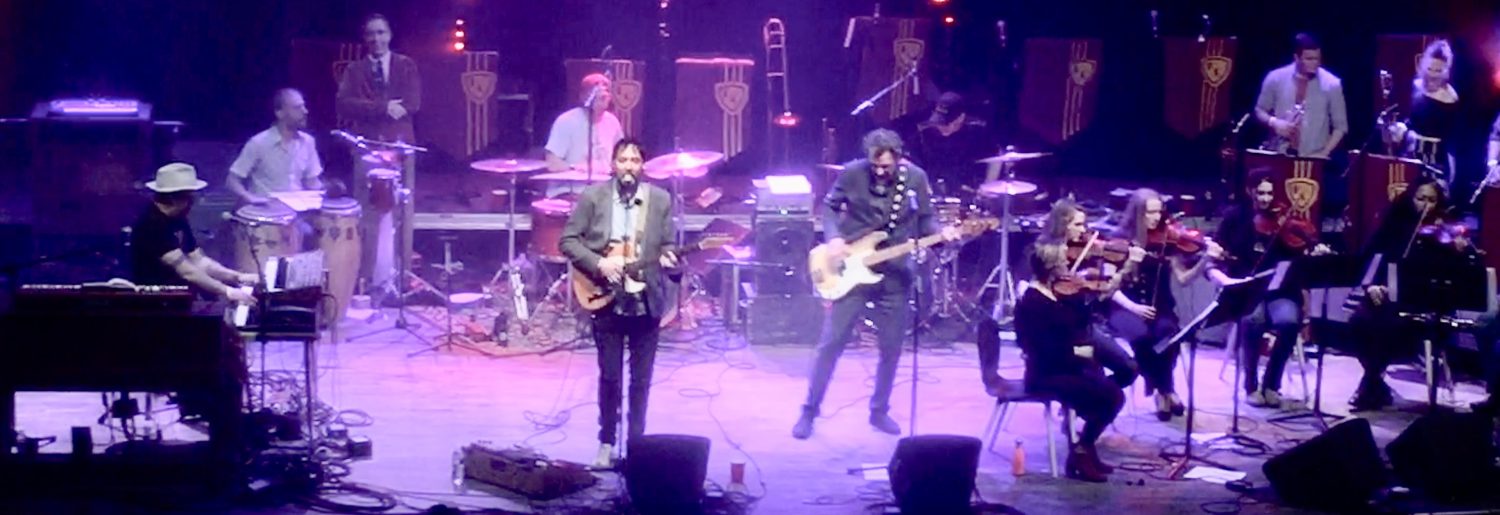
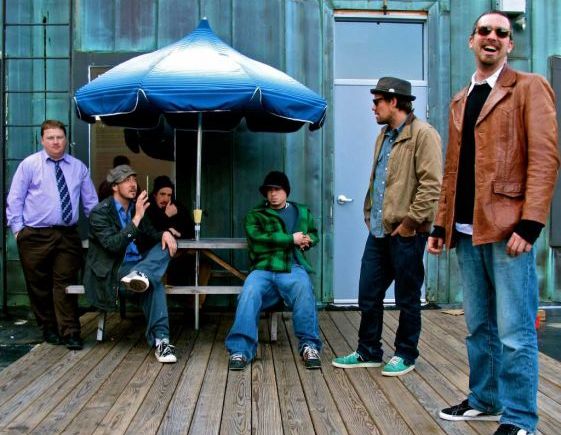
When drummer Tony McNaboe delivered the burned copy of Rustic Overtones’ New Way Out, he tucked it inside the packaging of the re-released and re-mastered Long Division, the band’s first proper album, complete with horn section and keyboardist Spencer Albee. It’s fitting, as New Way Out is the first proper album by Overtones 2.0, post Albee and seemingly with a brand-new string section, present on each of the album’s 13 tracks.

It would seem that 2008’s Light at the End was just that, the end of an era, despite it having been released to trumpet the band’s reunion. There is no doubt that New Way Out is again appropriately named, a record that, for all its Dave Gutter-penned lyrics and Tony McNaboe-pounded skins and Jon Roods-plucked bass, is far from that core of primal energy that launched that band and drove it to its many heights (and then became Paranoid Social Club, though we’ll get to that in a bit).

In its place is a textured and dense amalgam of the collected band’s many tastes and endeavors – the funky soul of Zoidis’ Soulive; the gentle orchestral waves of Dave Noyes’ Seekonk; Jason Ward’s concert band roots; Gutter’s sedate solo work with Evan Casas – as captured in a practice space cum recording studio presided over largely by Roods. Finally endowed with a freedom to start from scratch, unencumbered by manager, producer, or label, and armed with some 15 years of experience as professional musicians, they have crafted what is clearly their most important artistic work, though it may be at the expense of some of the fire and brimstone that once drove their fans’ frenzy.

The band’s hits – “Simple Song,” “Check,” “Combustible,” “Iron Boots,” “Rock Like War,” “C’Mon,” even “Hardest Way Possible,” to an extent – have largely featured a Gutter at his most urgent and strident. I can barely picture him live without seeing his eyes smashed shut, his spine ruler straight and muscles taut, his fist punching the air.

That pose makes but few appearances on New Way Out. For me, the band have always lived and died with Gutter; now I and many others are experiencing him in a new sublimated role. Rustic haven’t quite become the Borg, but they are as much of a cohesive unit as you’ve ever heard them.

This may be because there are so many of them it can be hard for any one person to stand out. The liner notes list no fewer than 29 musicians that lend talent to the record (and you thought Spencer’s School Spirit Mafia was big…). And for that matter, the band members wear tons of hats. Roods alone gets credit for “upright + electric bass, keys, percussion, vibraphone, bells, guitar, vox, vacuum, wd-40, broom, delay.” I’m not even sure if a couple of those are jokes. The songs are so layered there could be virtually anything in there.

Rustic are fully invested and unapologetic, though. The opening track is the title track, coming to life with rising orchestral surge as from a Broadway musical and moving to a languid chorus: “I found a new way out/ If you don’t want to make a change, you should shut your mouth.”

With that statement made, however, they move into a “Drive My Car” Beatles take called “Everybody Needs to Be Somebody’s Friend,” where the horns again bleet, Gutter takes a more swaggering approach, and “whoo-hoo-hoo” backing vocals punctuate the verse. Here’s where you might notice Albee’s absence, though. He may have added harmony in the chorus, and probably would have pushed to popify the chorus as well, instead of ending it moving downward to make it more bluesy. As it is, the finish is dark and brooding, meditative before washing away into static.

“Nuts and Bolts” doesn’t get any sunnier, with a goth intro full of cello transposed with a fluttering flute, accompanied by a narrative of a woman who’s been caught in a car accident, and now has “sutures in her skin/ Like tracks for tiny little trains.” Nor does “Like the Blues,” a sprawling and lugubrious ballad that features a somewhat rare extended guitar solo from Gutter, crunchy and gritty against the purity of the backing strings. At just under seven minutes, it’s been trimmed significantly from the 10-minute-plus version they previewed for me in the practice space one temperate summer evening. “Can’t Shake You” has a bit of Wilco-style rock mid-song, and some soulful female backing vocals, but generally lounges out to five minutes of ballad.

Even the more upbeat tunes don’t exactly rock out. “All Together” is an us-against-the-world anthem, cool as hell as Gutter and Nigel Hall trade riffs in the verse to create a feel like Gnarls Barkley doing “Crazy” with the full orchestra at the 2007 Grammys. “Downside of Looking up” you may have heard on the radio, its trumpet trills and rising strings giving way to a bass-riffed bridge filled with ghostly chanting.

“The Same Does Not Apply” shows off reverbed Gutter strut and some “Start Me Up” guitar bits, but, seriously, is that the upbeat song?

With just about every tune here, the string sections, written about by Noyes and Zoidis, are downright lovely, but is that why anyone listens to Rustic Overtones? The string section? Maybe they will now. The band will have to hope their fans have grown with them and no longer thrive solely on those itchy ska parts, Gutter’s primal screams, the explosive choruses that send a crowd into a frenzy.

Because, if they did [in 2009, anyway], they’d probably just go see Paranoid Social Club: Gutter, Roods, and McNaboe playing some of the funnest rock music you’ll ever come across in a beer-soaked club.

When songs off New Way Out get finished, crowds will applaud genuinely, they’ll be awed and amazed, they’ll turn and hug their significant others and mouth, “can you believe that?” Which is great. It’s just that when “Check” gets finished people are bathed in sweat, hopping on the balls of their feet and screaming at the top of their lungs. The chorus of “Combustible” is one of my top-10 all-time favorite live-show moments. Every time I see it.

And there’s nothing that says the live set can’t have elements of both. I just have to admit I wish this new album had elements of both. I’m awed. I’m amazed. But I’m not bathed in sweat. Then again, I can get the swine flu for that.