
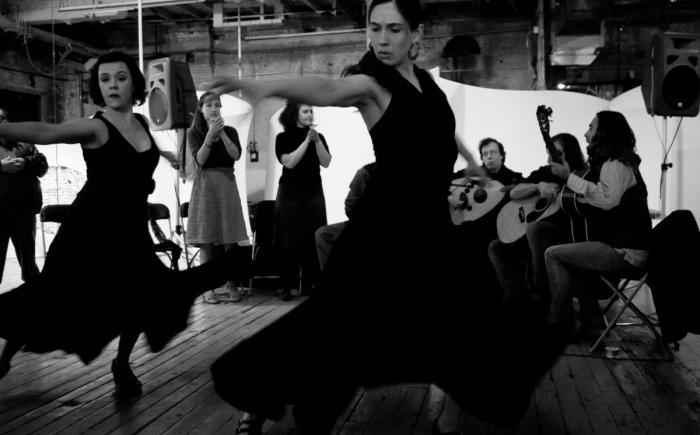
The invincible Olas
A surprisingly pop Cada Nueva Ola
Olas will tell you they’re more family than band, but maybe that’s not so uncommon. Actually realizing the nature of the relationship? That’s rarely talked about, the intimacy and intensity of the experience of playing music with someone else. Maybe it’s those bands who accept that reality and explore the inner reaches of each others’ souls that produce the truly transcendent works. Maybe that’s as silly as arguing that “chemistry” helps win baseball games.
Regardless, the band have newly created Cada Nueva Ola, as rollicking as any family dinner table. The latest five songs from Portland’s premiere flamenco outfit offer a wild emotional ride, from life-affirming highs to soul-searching lows, explosively crafted from acoustic guitars, an oud, and the various percussive sounds created with hands on hands and body and shoes on floor. This is music for hair-wrenching and wild abandon, impulsive shouts, whoops, and hollers.
Alongside the new EP, being released on vinyl, the band will also issue videos for the first three songs, directed and edited by Ali Mann, with help from David Meiklejohn and Nick Poulin. Watch them first. They lend a great appreciation for the work Olas do, for the performative construction of the songs, and for just how serious this business is for the band.
Ushered in by an upbeat strum build from Chriss Sutherland and Leif Sherman Curtis on guitars, and the cycling riffage of Tom Kovacevic on the oud, it’s hard not to be impressed by the gravity of Lindsey Bourassa and Megan Keogh’s movements in “Mis Amores Han Desparacido.” Their shoes echo precisely off the floor, invited by a storm of claps from Molly Angie and Anna Giamaiou, who also provide ooo-ooo backing vocals.
Sutherland, too, sounds particularly insistent and impassioned, but the translation of their Spanish lyrics reveals a more contemplative message: “A great wind came through my life/ Carried and scattered my friends around the world / A test perhaps? / I don’t know.”
The sheer athleticism on display by Bourassa in “Baya Song” is impressive in its own right, as she rips 32nd notes with her feet while muscling her way around the floor (perhaps the earlier baseball metaphor was inspired the fact that she has the quick feet of an elite second baseman). Again, though, they belie their seriousness by opening up into a power-pop chorus (in relative terms), repeatedly belting out “soy invincible,” their insistence that they are invincible incredibly compelling.
I wanted to quit my job and write a novel, right away. Listen to this with a buzz on and you might find yourself halfway to airport with nothing but a passport and an extra change of underwear.
The look on Bourassa’s face is incredibly determined. It’s life and death. This is the mantra of people who need to tell themselves they’re invincible just to get by, the oratory of the underdog, those people who have nothing else. The song is the same kind of subversive pop that KGFREEZE worked with “Better Falsetto,” when it comes down to it.
Olas don’t take the easy way out, and they aren’t some kind of sunshine-all-day bullshit artists, but they are fiercely into what they want to do and offer a version of the world that’s hard not to fall in love with. I wish I spoke Spanish so I could better appreciate the biting realism of the “Phar Lap” verse, “Beating dead horses / You know how they say / You won’t want me tomorrow / But you love me today,” in their most Flamenco song on the album.
They’re gorgeous without trying to convince you they’re pretty. On the closing two traditional numbers, “Volare” and “La Llorona,” Olas alternately bring the former into the present, by taking something from Domenico Modugno (think Dean Martin) and making it sound like a present-day stringband tune, and then absolutely crushing your hopes and dreams with the dark and brooding story of the mythical weeping woman, shoes on the floor sounding like echoes of gunfire in the distance. Sutherland nails the desperation of a woman who drowned her children for a man, only to have him reject her.
That’s the kind of bad decision family sometimes forces you into, shattering hearts and tearing at souls. Family, too, is a bedrock on which you can build toward the highest heights and Olas have, again, truly created a monument here.


 Portland's Best Albums | Maine Music Reviews