
Lost on Liftoff: Lost on Liftoff

Mapping the stars

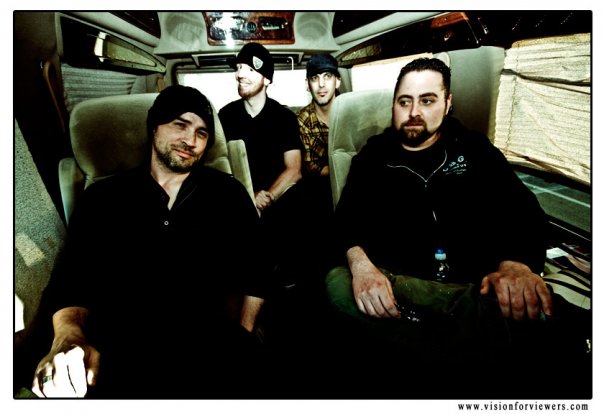
Lost on Liftoff’s debut launch is on course

Lost on Liftoff’s self-titled debut EP had no business being released in the dead of winter, early 2006. The bright heat it radiates only mad us pine for the warmth of summer rays all the more. Oh, the sentiments are dark, sure, wonderful retrospective melancholy mixed with plenty of jilted bitterness, but they’re delivered with such pop intensity you can veritably warm your hands by them.

I don’t care if the first song does bid a “Goodbye Summertime.”

It’s no surprise that former Goud’s Thumb and 6gig frontman Walt Craven professes a simple focus for his third foray into the Portland music scene and beyond. “The song is king,” he says. “The songs are the spotlight and not any one particular person or instrument.”

That’s a lot easier to say when you surrounded by the talent Craven is in Lost on Liftoff. He counts himself lucky Nick Lambert (Chaos Twin, guitars and vocals), drummer Shane Kinney (Broken Clown, and whose column I edited for about a year as part of the once and future FACE Magazine), and bassist Dan Walsh (known as Shifty, also from Chaos Twin) called him up and asked him to join a project they’d been playing around with for a year or so.

“I’ve known Nick for a long time and I knew that Nick was a great songwriter, so I was pretty excited,” says Craven. “I was floored by the songs that they were working on and I called Nick back immediately and said, ‘I’m in.’ ”

Good thing for us he did. The four-song tease they released January 31, 2006, is loaded with huge singalongs and compelling rock and roll. That’s right, rock and roll. Can we be excused if we like risk hearing damage in the car on the way to work? No, you can’t have a conversation over this. Shut up and nod your head.

How about a chorus like this: “We’re naked and wasted, and we’re waiting / Waiting for the moment to take us, from frustration into patience / Forward till the end of the line.” Coming at the end of “Naked and Wasted,” which finishes the disc, this echoes a frenzied 16 minutes of music that strips you down and shoots you up.

These are progressive songs that love every bit of the verse-chorus-verse construction, but don’t think just one type of verse, or one type of chorus, is quite enough for one song.

So, in the four-minute “Goodbye Summertime,” we’ve got a standard opening verse — containing the lovely sentiment, “Take me apart by bolt and screw / Keep on poking holes in my spacesuit” — that leads into a melodic pre-chorus. Then we get chorus part one: “Goodbye summertime, another year to wonder why / I feel left behind, another way to say goodbye.” This is your traditional yelled chorus, the everyone-stands-up singalong. Oh, wait, but then we get chorus, part two: “I’m doing fine without you,” delivered in traditional ballad chorus fashion four times all melancholy and subdued, emoted with increasing force.

Great juxtaposition. There isn’t a throwaway transition or verse on this entire EP.

Yet “40 Miles” is still the obvious single. It separates itself immediately with the two guitars repeating a quick 16-note, measure-long lick that carves out a back-ended high hook. Walt enters over the still-spare background: “Forty miles to go, and there is no summer / Could you take me home? Could you be yourself?” Kinney’s drums punctuate the end of each line, while the guitars support in a kind of holding pattern, like restless caged animals. “I can feel the sway beneath my feet as we go…”

An entreaty serves as transition to the chorus before, whammo, here comes the big singalong. You’ll have it down by the time the first listen ends, so I won’t bother typing it out, but don’t forget to listen for Kinney’s snare. It has some interesting deviations, sometimes solidly on the one, other times throwing in little hiccoughs on the 2 and 4. Don’s miss his fills, either, coming into the chorus. Not that you could.

The song is just as just-plain-catchy as anything Blink 182 ever wrote, but with more depth of feeling. It doesn’t feel that disposable, nor does it feel written for a 14-year-old girl. Though the 14-year-old girls ought to like it just fine (those who forget that 14-year-old girls drive the record market are destined to become “underground”). The jokes are simply too obvious, but I’ll say it anyway: There ought to be a little bit more 14-year-old girl in all of us.

There’s some in Lost on Liftoff, that’s for sure: “There’s just a cool, ego-less atmosphere and there’s an open mindedness involved that makes it very easy to try new and different things,” says Craven. “Plus, the music is just fun to play.”

Fun to listen to, too.

Photo Credit: Robyn Kanner

Tree By Leaf: Of the Black and Blue

Melancholy chorus

Tree By Leaf are Of the Black and Blue

My first brush with our reality-television culture came back in 2005, judging a songwriting competition for NEMO (a SXSW wannabe you may or may not remember), which owned the Boston Music Awards, one of which Ray LaMontagne won despite the fact that he’d played roughly five gigs in Boston in his life. Beforehand, in the crowded Starbucks where the songwriting comp was being held, I mostly chatted with the competitors about how it was kind of like American Idol and how we were all basically embarrassed to be involved, but the Phoenix was a sponsor and the winner would take home a Les Paul guitar and move on to compete further in Boston for a chance to go to Hawaii. Who doesn’t want to go to Hawaii on someone else’s dime?

The thing started and Jason Spooner, Emilia Dahlin, Rachel Griffin, and Pete Kilpatrick proceeded to one-up each other with a series of pretty damn impressive performances considering they had three “judges” sitting in front of them (a colleague of mine from WFNX and a NEMO rep were the other two) and they were playing in friggin’ Starbucks (which was fine, actually, but still). Then Garrett Soucy came on the stage. What did he do differently? It’s hard to say. Armed like three of the others with just an acoustic guitar, he didn’t play it like a singer-songwriter. He kind of jabbed at it like an indie rocker, imagining a drummer and bassist to fill in the pauses and quietudes he didn’t mind letting hang in the air. And his songs had choruses, but they were progressive, and their narratives covered serious ground (and time – he was relating a relationship to first Roman times, then the middle ages, then the Renaissance, etc., I’m pretty sure).

*It’s funny how, nine years later here in 2015, Kilpatrick is fundraising for his sixth album now, and Spooner and Dahlin are still doing their thing, while Griffin has found her way down to NYC, where she’s also still performing and writing songs.

Even Soucy’s still plugging away, with a new album in the can, recorded up north where he’s been mostly hiding out for the past half decade.*

But, back in 2005, this is how I originally put it: Soucy might never be the mainstay of the folk circuit Jason Spooner could eventually be, nor the pop star Kilpatrick could be with his charming-pants-off charisma. He won’t be the next Diana Krall, which is a possibility for the aw-shucks Griffin, nor an independent self-made veteran of the college circuit, as is likely for Dahlin. He’s a special talent, though. Sufjan Stevens special; Elliot Smith special. And if half of you never heard of Stevens [seriously, back then he was pretty obscure], and only heard of Smith because he killed himself, that’ll tell you something about being a special talent. It doesn’t always translate into worldwide acclaim. Like many who seem to live inside their work, Soucy’s sure not much for self-promotion.

Maybe that’s why it’s December and I’m just getting around to reviewing the latest release by his band, Tree By Leaf, which came out in May. I’m not sure what other explanation there could be. Of the Black and Blue is spectacular, the type of album that demands you spend time with it and nothing else. The type of album that is all-consuming in and of itself – not background music, not what you put on at a party, not something you should hear on the radio because one song just wouldn’t be enough and they wouldn’t pick the right one anyway.

For his annual GFAC compilation [Volume 6], Charlie Gaylord picked “Never Seems to Leave,” which sure has a certain David Lynchian shuffle to it – one of those songs that’s fast despite the fact that it’s played slowly (or maybe it’s the other way around). Plus, it opens almost perfectly for a Maine compilation: “Trailer park, you’re aglow / You’re a dusted nineteen-sixty-four volume.” Yes, it’s that weird mix of backwoods and frontline intellectualism that Maine seems to revel in. It’s hard to beat, too, Garret’s interplay with wife Sirii, who comes in for the next verse and an ensuing chorus where she sings what’s picked out on the bass so nicely you almost don’t notice, then breathes out the barest backing to Garret’s second verse. Man, it’s good in the headphones. Every once in a while, their voices don’t quite hold up, but it totally works in a Brechtian sense of making you notice the construction of the music itself – this is the way you do this sort of thing, whether you’ve got classically trained voices doing or not it is really irrelevant.

But that’s maybe the fourth best song on the disc. “Rupert Sheldrake’s Favorite Girl” got 15, maybe 20 listens. I love this song in a big way, with Garret’s vocals doubled throughout — really two tracks, not just a chorus pedal or an echo, and they’re just the slightest bit off, both in good ways, with the right channel just the slightest behind, adding an urgency and pushing everything forward. There’s a great guitar break after the first verse, followed by a stellar chorus: “Wait a minute / Hold the phone / I still gotta walk this memory home / I’m in love with Rupert Sheldrake’s favorite girl.” Who’s Sheldrake? God, I hope it’s nobody. Right after the chorus, a really deep organ comes in, sounding like loud stadium applause, very country-rock, as though the Jayhawks decided that instead of rosy-cheeked harmonies they wanted to go the ironic route: “‘That’s funny,’ I said ‘because it’s not about you’ / The sky grew dark, and the wind did blew / ‘That’s weird,’ she said, and handed me a cigarette off the dash.”

At the very end, you can hear the slightest chair creek when Soucy sits back up after letting out the final note. Like much of the rest of the record, you feel you’re privy to something remarkably intimate, created just for you and this time and place.