Micromassé: Micromassé

Meeting Micromassé

Jazz, writ large and small

The Fogcutters have to be one of the better local music stories of the past decade. You know you’ve got a local fanbase with taste when one of the most popular acts is an old-time big band doing everything from traditional swing to hip-hop covers.

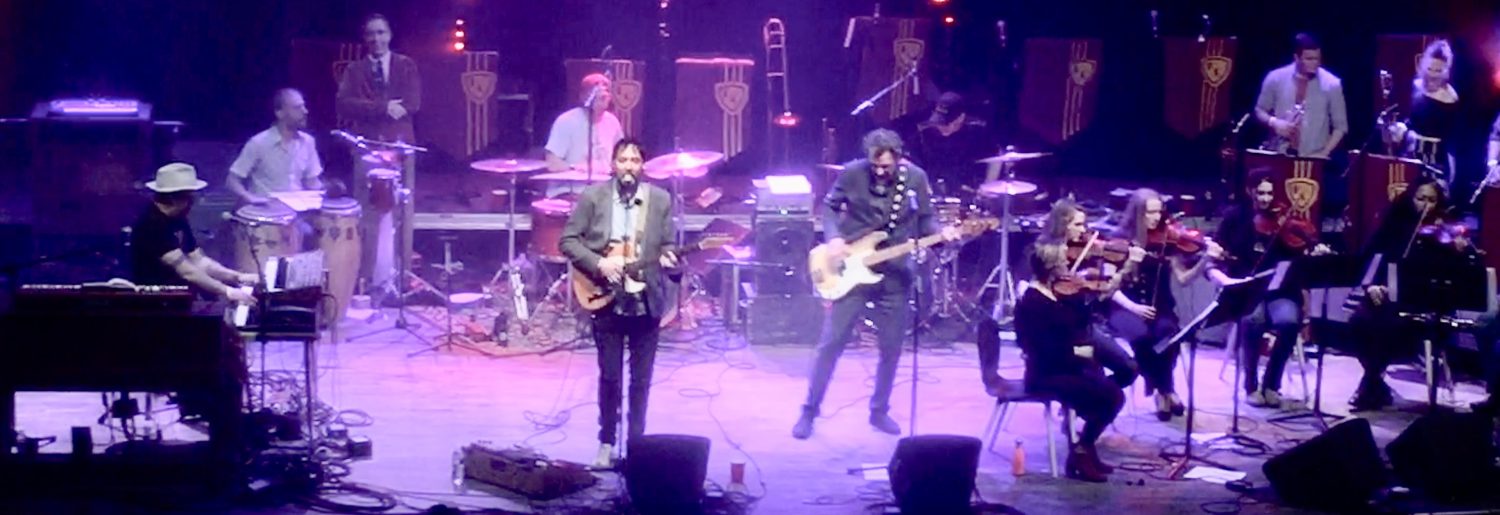
So maybe there’s room for Micromassé, also featuring guitarist Max Cantlin and playing old-time jazz, though this time in trio format, and all originals, and without any singing. Cantlin, also known for his work with Gypsy Tailwind/Anna Lombard and This Way, is joined by organist Peter Dugas (the Awesome, Inside Straight, Zion Train, etc.) and drummer Chris Sweet (Zach Jones, Dan Capaldi, Radiation Year) in creating a tight group that throws back to the hey-day of bop-style jazz, while bringing in elements of R&B, pop, and Latin works.

This isn’t American Standard Songbook stuff, though. There’s fusion at work here, and Dugas writes all the pieces, so there are times when everything sounds completely contemporary, but it’s more often you’ll be reminded of the likes of Joe Pass and Wes Montgomery on the guitar, or Rhoda Scott and Herbie Hancock on the organ.

Okay, maybe not as out there as Hancock got, but check out Scott if you don’t know her. She could rip and Dugas can certainly lay it down, with plenty of bass notes from his feet, too.

That’s how he starts “Novi Sad,” a 10-minute midpoint in the band’s 10-song self-titled debut album. Actually, it’s a cowbell from Sweet that goes first, but then comes Dugas’ moody bass and trudging chords, setting up a foundation for Cantlin’s guitar to ride on, just a series of repeating riffs, feeling the way through the song’s open. It’s a completely organic experience that manages to feel digital in the way each instrument introduces repeating parts, transitions them to something else, and then exits for a bit. Like a producer with nearly infinite riffs at her disposal.

Then, with about 1:20 to go, the whole thing fades out and introduces an entirely new song for a rousing jam, like Nigel Hall midway through a 20-minute jam, but less manic and Sweet’s got a lighter hand than most jam or R&B/soul drummers.

Why make that bit part of the larger 10-minute track? Well, Micromassé don’t have to explain themselves to you. They’re going to go wherever their fancy takes them, whether it’s into a soaring crescendo that crests and plays out in “Tamed Cynic,” before a Dugas freak out that ends in a solitary note like a laser beam, or Cantlin doing an upstroke and playful chime in “Hinche,” then moving to an improvised group of phrases that seem to come to him after a moment’s listen to what the universe is whispering in his ear.

My personal favorite is probably “Ruelle Des Urculines,” a waltzing ballroom tune that still manages to open like Midnight Marauders. The organ is sing-songy like a an ‘80s sitcom – is that Jack Tripper bouncing around the corner? Sweet is crisp with the high hat and Cantlin is reserved in his chimes so Dugas really has the floor. Later, Cantlin comes busting in easy and free, like California beaches and the wind in your hair.

“Fero City Shuffle” is pretty easy to sidle up to, too, with a big whack on the snare for a consistent beat and Dugas picking out a strutting bass with his feet. This is the most bluesy tune here, and there are echoes of that Buddy Guy revival that happened in the guitar lead, but the chorus (I think you can call it that) picks up the rock vibe and the song ends in a hurry, too short.

You can say that for the album as whole, actually. It seems to end before you’re ready for it. It’s belittling the work to say it’s great background music while you’re working or reading, but it sure does work for that sort of thing. It also works just fine if you want to put it on and make listening to it your primary occupation.

Photo credit: Erin Little
OHX: Places

Skeleton crew

OHX debut with people in all the right Places

There was a solid six-month stretch in 2013-2014 where the Other Bones were the best band in Portland. With Loretta Allen’s pipes at the front and an alluring amalgam of digital loops and organic sounds backing her, they had all the danceability of 1989 with all the substance of the Postal Service.

And then they broke up.

If you were into that, though, you should be excited about OHX. Instrumentalist and songwriter Andrew Mead is a holdover, and he’s put together a collection of instrumentalists and singers (including Allen) over at the Halo that has produced a deeply intriguing set of four songs set for release next week with the Places EP.

They are digitally based and beat- and keyboard-driven, with a solid affinity for the likes of Danger Mouse and the Sea and Cake, and always supplying a hook and melody you can grab onto. For this first release, too, they have rounded up three separate lead vocalists and a guy-gal duo to front their songs, essentially providing a pedestal and spotlight.

The results equal much of the Other Bones’ contemporary promise, tilling new ground in the Portland scene.

My sweet tooth for guy-gal vocals is well established, so it’s perhaps no surprise that I’ve gravitated so strongly to “Blades,” featuring Trent Gay (Arc of Sky) on primary lead, with active support from Renee Spookydawn Coolbrith (Dean Ford), who’s establishing herself as a comer. It’s moody and even creepy in the open, with distorted child-speak and low-end growl that moves into four on the floor and an upbeat keyboard line.

But then there are the vocals. The simple fact is that Trent Gay is the best vocalist on the four tracks here, and the rest of the vocalists are all well regarded for good reason. His precision in delivery is particularly strong, the way he closes off syllables, controls his breath, and adds a huskiness to a higher-register part. Man, it’s good: “How can I know when you don’t say what you mean?/ Please say.”

Coolbrith is lovely in the high harmony — “You’re pulling me deeper into you/ You’re handing me blades, when you’re touching my face” — crisp and cool like these bright, sunny winter days where the sun never seems to get more than four feet from the horizon.

As on all four tracks, OHX do well with the dynamics, pulling back into a clacking rattle of percussion in the second verse, then building back out with Men Without Hats keyboard melody and pulsing beats. It’s really hard not to hear Broken Bells, especially on the opening “The Beginning,” fronted by Crusoe’s Jeremy Spring, who does at times sound like James Mercer when he arcs up toward the tenor. The synth glow and choppy sampling is maybe a touch over-used, but when the vocals enter everything’s forgivable: “Take this now, it’s what you wanted/ You swore you never knew the cost.”

There is a jittery woodblock, builds that show patience and avoid the big drop, a general sense that a bit of trial and error was at work, but there were people in the room smart enough to recognize when they struck gold.

Caleb Sweet combines with Mead to write “Anesthetize” for Anna Lombard, and it’s hard to recall better work from her. She has R&B sass, with an ape of Hall & Oates’ “I Can’t Go for That” with her “but I won’t say no tonight,” and seems to float above a roiling collection of percussive sounds. This track is the most bassy, as part of the transition into the chorus, and the sexiest, despite the efforts of Allen on the closing “I Can’t Make You Love Me.”

With a lilt that matches the Bones’ “Bad in Goodbye” for old times’ sake, this last piece is the least predictable, with a halting beat as part of a very complex rhythm bottom that can be overwhelming of a vocal part that seems caught in between a ballad and a rocker. Still, it’s got the kind of slow-developing keyboard line the National are known for and Allen’s performance is worth the listen.

All told, this is a take-notice kind of debut, demanding attention from the first few bars of music. Let’s see what they make of it.