
Regardless of the cost
Tony McNaboe testifies on sophomore release
If you were concerned that the return of Rustic Overtones would mean the ends of their various side projects, it’s clear now that was a fruitless worry. The ancillary releases have intensified as the Overtones continue to hone their second post-break album. The new year already brought us a Plains album featuring Dave Noyes (a limited edition, but still), and this summer [of 2009] will see releases from a new Dave Gutter project (a duo release with Evan Casas), Spencer Albee (not that he’s an Overtone anymore), and now Tony McNaboe, who’s crafted another soulful solo album, both self-produced and -recorded (though Jonathan Wyman did the mixing).
 As is the rage, nowadays, there are guest spots by the likes of Gypsy Tailwind’s Dan Connor and fellow Overtones Nigel Hall and John Roods, but this is very much NcNaboe’s album. It is more overtly spiritual than 2003’s Destination, more personal, raw and dispirited, and it’s no tossed-off, let’s-see-what-happens affair. He both moves himself forward artistically, drawing on hip-hop and chanted singer-songwritery fare a la Citizen Cope, and creates songs with substance.
In fact, The Cost of Living [the record is in very few places online, even Bull Moose is out, but it does exist at Down in the Valley, which is like the Minneapolis Bull Moose, I think] reads like a trek through a deep winter and a man who’s just coming out the other side, touched up by a bit of frostbite. In 2003, Ray LaMontagne was opening for him. Nowadays, McNaboe’s got his band back together with another album on the way. What happened in the middle? “Tired eyes, ain’t slept in two days … I swear I’m killing myself a little bit every day”; “Lately if you see me/ I apologize … I failed my family and friends”; “There’s beauty in this somewhere/ and I just got to find it.”
Whether he’s playing a role in individual narratives, or testifying about his own faith, McNaboe doesn’t blow smoke up anyone’s dress on the new record. There isn’t, however, any sign of self-pity or resignation. On the six-minute title track—housing the potentially maudlin line, “he can’t feel a thing from his neck to his feet/ but he can still feel a heartbeat”—he takes pains to finish the chorus with vocal move up, so that the cost of living doesn’t seem like a burden, but rather a jewel to be coveted, as though what you get back is always worth what you pay.
If anything, McNaboe doesn’t go as far with his music as he does with his message. At times, there’s full-on incongruity. For “Doomed,” a slow piano ballad indicates a love song, and the first verse indicates he’s, like, doomed to love this girl forever, but then he’s failing his family and friends (“that’s what people do”) and that faithful, grateful guy is gone and I’m depressed but snapping my fingers and singing along.
In the finishing “A Prayer, Pts 1 + 2,” he’s thanking Jesus, confessing all, asking to be taught to stand up and walk again, savoring every word of every verse like a gobstopper, but the synths that drive the melody feel really cold. It’s such an organic message delivered in such a digital way. There are times when you can just see the ProTools screen in front of you and McNaboe painting in the bass line (“I Know You Hate Goodbyes”).
So, maybe it’s just taste, but I find myself gravitating toward “Miracle,” where his voice is most naked, the piano is pretty-sad, and when the effects enter it’s like the sun coming through a window and lighting up all the dust in the air, an accent instead of a means.
“We know tomorrow’s on the way, and it’s a brand new day,” but seeing is believing, and there’s a difference between being told something and actually hearing it.
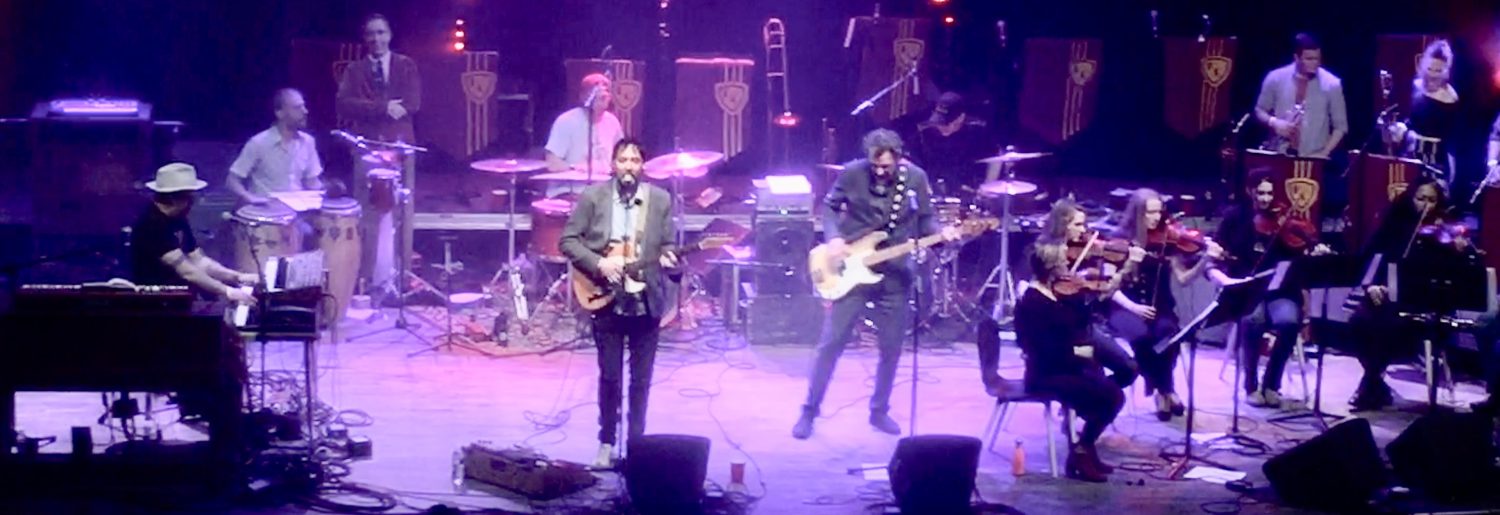
[Photo thanks to WCYY. I believe it’s an Alive at 5 gig from the week this album was released.]

 And they’re just getting started, really. Halo Sessions’ spare and measured arrangements weren’t necessarily by design. They were in some ways simply sketches by two vocalists, Dan Connor and Anna Lombard, who were trying to figure out just what kind of art they could make together. Over the past year they’ve decided they sound pretty great together, thanks, and they’ve collected themselves a band to fill things out: Max Cantlin (This Way) on guitar, Tyler Stanley (Sly-Chi) on keys, Colin Winsor (Jaye Drew and a Moving Train, Jason Spooner) on bass, Chris Dow (Band Beyond Description) on drums.
 Portland's Best Albums | Maine Music Reviews