Station Wagon ride with John Fahey
Robert Stillman returns with the Archaic Future Players
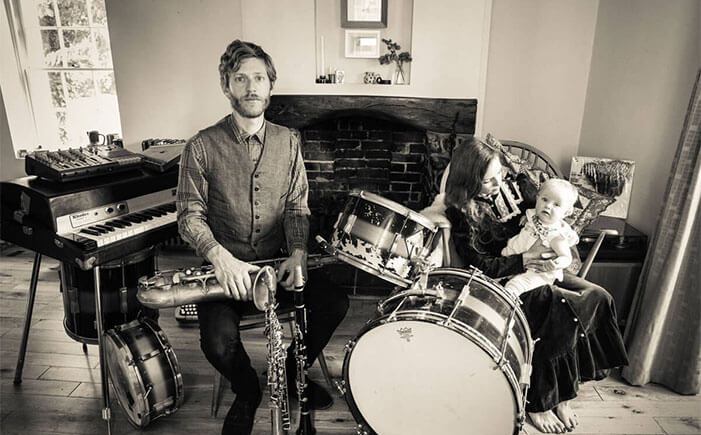
For a guy who plays the saxophone the way people talk about, Robert Stillman is an awful good drummer. And keyboard player. He does a fair bit of impressive composition, too.
The last time the Portland native (now Oxford man) swung through town, in 2009, he was carrying a piano record, Master Box, his first release on his own Archaic Future Recordings. This time through [this originally ran in 2012], he’s teamed with Apohadion Records on Station Wagon Interior Perspective, a 20-minute four-suite work with a couple of bonus tracks tacked on.
 Apohadion is Rustic Overtone (and more) trombonist David Noyes and renaissance man Pat Corrigan’s lovechild, and its DIY ethic couldn’t be a better fit for Stillman’s folk/jazz project, ode as it is to John Fahey, the influential fingerstyle guitarist who was well known for going his own way and doing his own thing from the ‘60s until his death in 2001.
He was the type of artist releasing his music on his own label back in the 1970s, when such a thing really wan’t done. Cutting a record back then was a bit more of a project. Starting out fairly clean-cut and precise, like the quickly repeating phrases he would pick out on steel-string acoustic guitar, Fahey got hairier and his music got thornier, delving into heavily reverbed electrified pieces in his late career.
Don’t go in expecting the kind of tribute album that Arborea worked out for Robbie Basho, though, with loving odes to his actual playing style.
This is more of a creative response to a life lived (and there actually isn’t a note of guitar here). It’s noisy and irreverent and unexpected just like the guy Wilco guitarist and Fahey friend Nels Cline remembers dropping trou and taking a leak in front of a folk festival crowd, but also remarkably precise and thought-provoking, just like Fahey’s inventive approaches to the guitar fretboard.
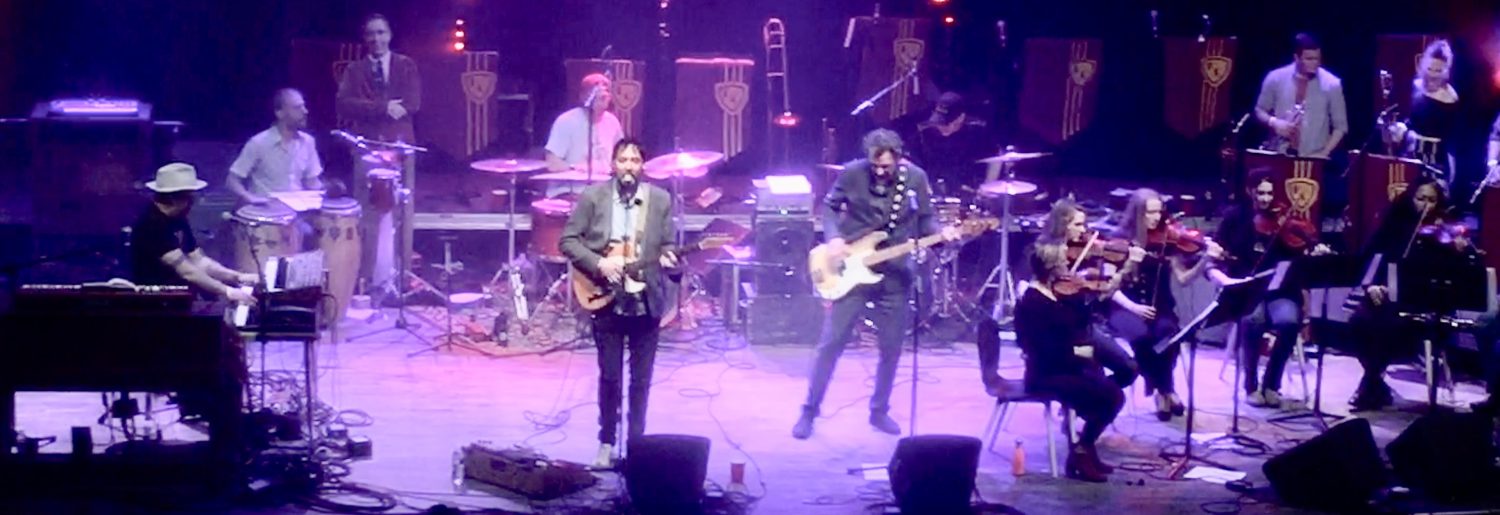
Only maybe “Part III: Stomp” could be said to actually sound like a Fahey tune. It has his pacing, a restless forward momentum of repeating phrases, Stillman on the drums to hit an isolated cymbal like Fahey pinging a harmonic. It’s hopeful, too, with the horn section (the Archaic Future Players) bringing in a bright sun in descending phrases.
It’s like the best backing to any 1970s super hero cartoon there ever was, with Spider Man and Firestar zipping off to fight a swarm of comet-irradiated bees.
Those horns feature Noyes on trombone, along with Kenny Warren on trumpet, Jeremy Udden on “C melody saxophone” (I put that in quotes to remind you to Google it and learn a bunch of stuff about saxophone inventor Adolph Sax), and Benjamin Stapp on tuba.
The latter instrument is a significant presence and has a lot to do with why Stillman’s arrangements sound so novel.
“Part III” isn’t much of a “stomp” when it comes down to it, at least not like you’d expect. And neither is “Part I: Waltz” much of a classical waltz, or “Part II: Blues” much like what comes out of the guitars of Buddy Guy and BB King.
The opener is downright cacophonous, with the tuba lending a serious gravity. Then it picks up some sway, with a Jane Austen/Anna Karenina vibe. Stillman also plays a Fender Rhodes throughout the album and the way he fills the last 20 seconds of this song with it is particularly enjoyable.
“Part II: Blues” is more of a slow creep to start, but then gives way to something seriously slinky. Later the trumpet keeps trying to angle in for some facetime, but isn’t given much room to stretch out.
Finally, there is the heartsick and naked “Part IV: Funeral March,” which features a perfectly tragic entrance by the tuba and trumpet, with the snare leading a march of the damned, reluctant to meet their fate, which, judging by the frenzied finish, is akin to hopping into a meat grinder.
This is demand-your-attention music, with enough going on to occupy you like a Faulkner novel. There are phrases that may unsettle you. There are times when you might feel you’re glimpsing a scene of Americana that rarely sees the light of day. Of course, that’s when the the surprises happen, those unpredictable moments that give you a thrill of discovery, even if they’re not immediately recognizable or comfortable.
Fahey notoriously spent the latter part of his life living out of his station wagon, an itinerant maestro used to playing in front of a handful of adoring fans. Let’s give Stillman a warmer hometown welcome when he swings through Portland.
 Portland's Best Albums | Maine Music Reviews