

Minding every Period
The Baltic Sea craft a crisp dystopia
It’s been nearly three years since the Baltic Sea’s phenomenal debut, Through Scenic Heights and Days Regrets, but when you’re making music like this, I can see how it might take a while to build a second edifice [this ran originally in 2011]. An artful construction of post-rock meandering and serious guitar heroics, the brand-new Period Piece can be even more ponderous, but also has more extended periods of high-energy explosiveness, making for an album like a cross-country drive, miles of pastures and sunflower fields rolling by between cities that dominate the skyline.
 With seven songs comprising the hour of music here, you know you’re in for some multi-faceted pieces, and Baltic Sea don’t ease you into things. The opening “The Free Design” is over 14 minutes, beginning with a repeating high-register guitar note like an ice pick and hinting at some true prog. But by the time Todd Hutchisen’s vocals enter, backed by Nate Johnson (who made the band a five-piece since the last release), the song is a force of nature, driven by Jason Stewart (Sidecar Radio, 6gig), who has replaced Jason Ingalls on the drums.
The whomping digital percussion is like a combination of Air and Minus the Bear, especially with Hutchisen’s high vocals, before an effect chops them up and spits them back out rippled and unintelligible. The early section is attacking, like the Conifer records but not quite as heavy, though Ray Suhy (Colepitz) does deliver something close to a metal solo on guitar, setting you up for a full pull-back to acoustic at 6:30.
There’s even a slide guitar, hinting at a country vibe, with a poppy bass from Jeremy Smith. But the guitars soon snarl back in, a crunching fuzz in the right channel, an ascending guitar riff in the left.
Finally, they cycle back to the opening vocal take, getting fairly sunshiney with the harmony, Stewart doing a martial thing on the snare, before slowing down to a crawl like a wind-up box running out its last rotations.
Whew. One song in and you feel like you’ve made a major investment in the album.
And, I know: If you like singalongs, this doesn’t sound like the band for you; if you’re into this kind of proggy rock, you’re no stranger to multi-suite songwriting. So what’s the big deal?
Well, first, this isn’t some kind of Rush/Yes homage. Baltic Sea are much more charming and aloof than that, and while they’re nerdy enough to have a song called “MirrorrorriM” and design an album that’s virtually symmetrical in its musical presentation, they also can put together songs like “Foss,” with sections that could rest comfortably on “Bridge over Troubled Water,” string arrangements by Dave Noyes meshing perfectly into guitar riffs like lightning bolts, energy crackling right up to a dénouement of fade-out.
There may also be birds chirping at one point. It’s hard to say.
Sure, there’s weird robot-gal talking about booster rockets and shit in the open of “Swiss Ticking Time,” but the way the elastic “just pretend to seem alarmed” bit launches into ’70s rock at the five-minute mark is genuinely thrilling, Hutchisen calling for you to sing along to a “la, la, la” bit that manages to be both mocking and completely heart-felt at the same time.
The title track gets pretty damn head-nodding, too, with a minute of music you could listen to for an hour straight and be totally happy with, inserted between sections where the drums seem to hit every five seconds and guitar harmonics chime in like gemstones falling onto a pipe organ. That sound’s only bested by the spacey intro to “MirrorrorriM,” which has strong positive association, like a super hero’s theme song, or maybe Supertramp.
Only in the closing “The All Consumers,” a 13-minute amusement-park ride, do the Baltic Sea completely let it all hang out. There are sections here of true chaos, a car-wreck in slow motion with theremin, industrial sounds like banging pipes. But there’s also what might be Hutchisen’s best vocal take, a low-register and breathy delivery with gravitas, sitting on top of intermittent 10-note guitar runs.
The best bit on the album might be where they take a two-minute chunk of guitar noodling and basically just change up the tone and effect, making them instantly aggressive and menacing where they’d seconds before been jammy and esoteric. Like the rest of the album, it makes you start to question what you’re hearing and why you’re feeling the way you do about it, and what you “like” in a song.
No, there’s nothing here that’s easily consumable, nor particularly summery, but, like the Whitcomb record before it this year, if you love to think about your music as much as you feel it and hear it, Period Piece is a must-listen.

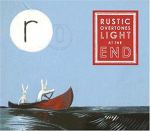 This Saturday and Sunday, Rustic Overtones will play their first plugged-in, full-band shows in more than five years for a crowd that bought up all the tickets in less than a week, forcing the band to add two more shows the following weekend, if only because they felt bad for the kids ponying up as much as $50 (possibly more!) on eBay and the like. They’ll also now play shows at old haunts like Harper’s Ferry in Boston, a new haunt like the Stone Church in Portsmouth, then a gig in Albany for good measure.
 Portland's Best Albums | Maine Music Reviews